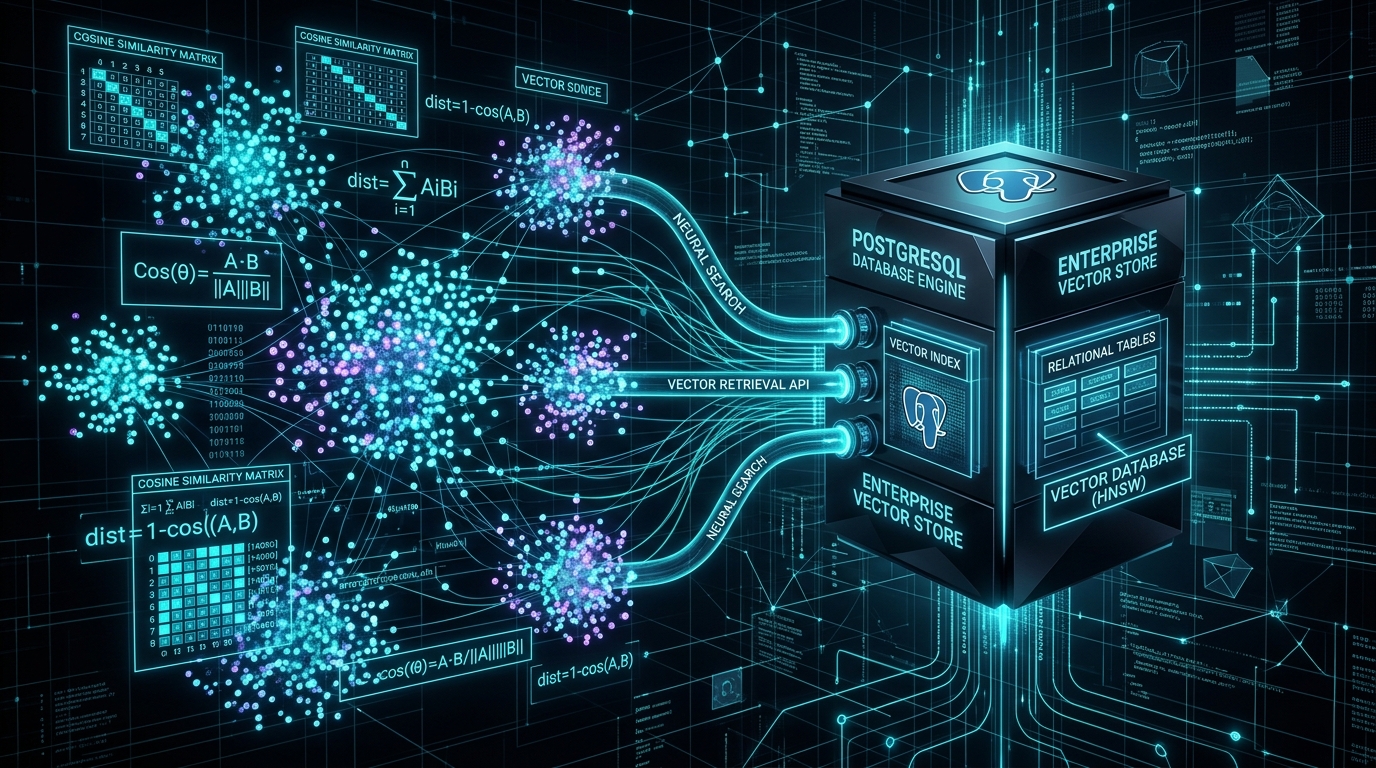
Why Sovereign Systems Win in High-Stakes Operations
Replacing public cloud security friction with deterministic, air-gapped data sovereignty.
Why Commercial Cloud APIs Fail Regulated Enterprises
- Subprocessor Chains & Data Sprawl: Commercial AI endpoints transmit sensitive discovery files, clinical records, and financial ledgers across opaque multi-tenant subprocessor networks—creating compounding breach exposure, compliance friction, and discovery subpoena risks.
- Metered Token Economics on Archive Corpora: Ingesting 50,000 pages of discovery records, 500-page deposition transcripts, or multi-year payroll files incurs compounding per-token costs and throttling rate limits that make exhaustive batch analysis economically punitive.
- Supervisory Burden & Hallucination Liability: In litigation and audited finance, leaders bear a non-delegable duty of independent verification (e.g. CCP § 128.7 sanctions, CRPC 1.1/5.3, SOX internal controls). Cloud chat interfaces lack coordinate-level evidentiary grounding, forcing operators to manually fact-check plausibly hallucinated outputs.
- Vendor Lock-in & Shifting Model Weights: Cloud providers routinely deprecate model versions, alter system prompts, and modify telemetry policies without warning, breaking production workflows and compromising repeatable legal work-product.
What We Build Inside Your Physical or Private Perimeter
- Zero-Egress Physical Sovereignty: 100% of OCR parsing, vector embeddings, relational indexing, and LLM reasoning execute strictly on dedicated bare-metal hardware inside your facility. Zero case data leaves your walls—eliminating subprocessor chains entirely.
- Fixed-Cost Uncapped Batch Processing: Ingest 30 years of firm archives, execute exhaustive cross-document depositions, and run multi-gigabyte audit reconciliations with zero recurring per-token fees or vendor API quotas.
- Deterministic Page-and-Line Grounding: Every extracted fact, chronological timeline entry, and damage calculation is tied to page-and-line coordinates with split-screen PDF verification—giving operators instant evidentiary validation under the strictest compliance standards.
- Complete Code Ownership & Portability: Built on industry-standard open-source primitives (PostgreSQL, pgvector, vLLM, Docker). 100% of schemas, scripts, and runbooks are committed directly to your private Git repository on Day 1.
High-Stakes Operational Acceleration
Discovery & Deposition Cross-Check
Instantly ingest multi-volume medical records, police reports, and deposition transcripts. Synthesize chronological injury timelines, treatment gaps, and wage-hour calculations linked to exact exhibit pages for high-impact trial briefs and settlement demands.
Ledger Reconciliation & Regulatory Diligence
Analyze thousands of raw transaction logs, multi-year payroll files, and scanned vendor invoices. Detect anomalies, compute PAGA/wage penalties, and cross-reference disputed line items against accounting standards with deterministic mathematical rigor.
PHI Records & Diagnostic Synthesis
Rapidly parse complex Agreed/Qualified Medical Evaluator reports, EHR histories, and radiology summaries. Extract impairment ratings, apportionment breakdowns, and treatment plans while maintaining 100% on-premise HIPAA custody.
How raw, uncurated documents travel from disk to verified intelligence without a single byte escaping the local network:
⚡ Hardware Realities: Sizing for Concurrent Enterprise Teams
Serving 20 to 100+ concurrent attorneys, paralegals, and analysts requires honest physical engineering: managing thermals, acoustic limits, and VRAM contention between live interactive queries and heavy batch archive ingestion:
| Component | Workstation Pilot (1 GPU) | Production Rack (2-4 GPUs) | Engineering Justification |
|---|---|---|---|
| GPU VRAM | 1× RTX 4090 24GB or RTX 6000 Ada 48GB | 2× or 4× RTX 6000 Ada (96GB–192GB VRAM) | Enables concurrent serving of 32k context windows without KV cache swapping or token throttling. |
| Acoustic / Thermal | Blower active-cooled (<42 dB whisper) | Dedicated sound-dampened 12U rack or server room | Permits placement directly in office copy/server closet without disturbing staff. |
| Throughput (Tokens/s) | 65–90 tok/s (single stream) | 280–450 tok/s (vLLM continuous batching) | Comfortably supports 40–60 simultaneous active search queries and real-time document drafting. |
| Batch OCR Indexing | ~1,500 pages/hour | ~8,000–12,000 pages/hour | Clears a 20,000-page complex case file overnight with full table layout reconstruction. |
Production Systems & Technical Execution
Live, verifiable architectures developed and operated by Kevin Ruschman.
Krusch Coding Harness & 2PC Commit Manager
Deterministic, sandbox-gated state engine preventing AI coding agents from corrupting production codebases.
- PostgreSQL Operating Plane: Relational state tracking for multi-agent tool execution, planning DAGs, and rollback logs with zero unvetted disk writes.
- AST & Diff Gate: Side-by-side AST impact analysis and color-coded diff verification via
@pierre/diffsbefore disk application. - Atomic 2PC Fsync: Under 32ms atomic two-phase commit manager. Changes are only committed to disk upon verified test passes and explicit approval.
Krusch Context MCP (Model Context Protocol)
Unified 16-tool MCP server delivering persistent episodic memory and semantic code navigation.
- Multi-Layer Memory Architecture: Epistemic confidence tracking, temporal decay, and proactive memory compaction across long sessions.
- AST Code Intelligence: Full-repository symbol graph traversal and dependency tracing without blowing LLM context budgets.
- Local Vector Indexing: Embedded sqlite-vec semantic search providing sub-5ms retrieval for coding agents and retrieval pipelines.
Krusch Cascade Router
Multi-tier hierarchical routing engine slashing inference latency and token burn to zero on deterministic paths.
- Sub-15µs CPU Stage-0 Gate: Intercepts exact matches, code fences, SQL statements, and syntax errors in microseconds with $0.00 routing tax.
- Sub-50ms Centroid Semantic Classifier: Lightweight embedding projections classify query complexity and route to local vs. frontier models.
- Zero-Overhead Policy: Eliminates bloated LLM-eval-LLM gateway patterns that cost 400ms+ and burn millions of tokens per month.
Enterprise Vector RAG & Batch Embeddings
High-throughput document ingestion and hybrid retrieval architecture handling dense specialized corpora.
- Hybrid Reciprocal Rank Fusion: Blends BM25 keyword matching with pgvector HNSW cosine similarity for 99%+ recall on specialized terminology.
- Dimension & Index Optimization: Solved pgvector HNSW 2000-dim limits and query latency bottlenecks across 500,000+ vector records.
- Tamper-Evident Audit Trails: Every query, chunk retrieval, and relevance score is logged with cryptographic hashes for complete traceability.
Bare-Metal Homelab & Cluster Fleet Operations
Real-world physical hardware engineering: thermal dissipation, storage reclamation, and reliable air-gapped container orchestration.
The 30-Day Air-Gapped Pilot & 90-Day Production Roadmap
A phased, empirical evaluation framework before committing $1 of cluster CapEx or full-time headcount.
48-Hour Synthetic Benchmark (Zero Client Data)
Validate pipeline throughput, OCR precision, and coordinate grounding without touching a single byte of your proprietary files.
- Synthetic dirty-document stress test: 200 pages of degraded multi-column scans, skewed faxes, and complex tables.
- Empirical OCR accuracy report (bounding box fidelity ≥ 98.5%).
- Demonstration of split-screen citation viewer and sub-50ms hybrid retrieval.
30-Day Air-Gapped Closed-Matter Pilot
Deploy a single dedicated GPU workstation inside your secure physical perimeter to process 3–5 closed case or audit files.
- Gate 1 (OCR Confidence): ≥98.5% word-accuracy on degraded historical faxes and scanned documents.
- Gate 2 (Math & Audit Precision): 100% deterministic accuracy on payroll, damage, or ledger calculations.
- Gate 3 (Latency SLA): Sub-1.5s query response on 20,000+ page matter archives.
- Gate 4 (Grounding Guardrail): Zero unanchored claims permitted without direct page-and-line evidence tags.
- Gate 5 (Day-1 Code Delivery): Full Git repository, PostgreSQL schemas, and Docker configs transferred to your team.
Production Scaling & Firm-Wide Integration
Scale the validated architecture to multi-GPU enterprise rack hardware, wire internal authentication, and onboard practice teams.
- Hardware commissioning: 2× or 4× RTX 6000 Ada in sound-dampened server chassis with dedicated circuit validation.
- Single Sign-On (SSO) and Active Directory / LDAP role-based access control (RBAC) integration.
- Automated nightly discovery ingestion daemon and continuous backup synchronization.
- Comprehensive staff training runbooks and operator documentation for IT/MSP handoff.
🖥️ Hardware Investment Tiers
Three calibrated hardware tiers tailored to team size, matter volume, and infrastructure strategy:
| Tier | Hardware Specifications | Target Capacity | Est. Hardware CapEx |
|---|---|---|---|
| Tier 1: Pilot Workstation | 1× RTX 4090 24GB or RTX 6000 Ada 48GB, 64GB DDR5 RAM, 4TB Gen4 NVMe, Quiet Chassis (<42 dB) | Pilot team (3–5 users), ~25,000 pages active archive | $3,800 – $7,500 (one-time) |
| Tier 2: Enterprise Production | 2× to 4× RTX 6000 Ada (96GB–192GB VRAM), 256GB ECC RAM, 16TB NVMe RAID-10, Dual 1600W Redundant PSU | Firm-wide (30–80 concurrent users), 500,000+ pages archive | $18,000 – $32,000 (one-time) |
| Tier 3: Encrypted Hybrid Gateway | Existing server / mini-PC for local AES-256 encryption & OCR, routing to Zero-Retention Cloud BAA endpoints | Distributed remote teams, burstable reasoning workloads | $0 – $1,200 hardware (usage billing) |
High-Throughput Data Engineering & Sovereign Retrieval
The mechanics of transforming messy unstructured archives into deterministic intelligence.
Solving Real-World Document Noise
Enterprise archives are filled with messy 200 DPI faxes, misaligned scans, multi-column layouts, and complex financial tables that break generic PDF extractors.
- Layout Analysis: Detects reading order across multiple columns, separating running headers, footers, and Bates stamps from substantive body text.
- Table Boundary Reconstruction: Rebuilds tabular accounting structures into lossless Markdown and relational SQL rows, preserving column alignment for mathematical calculations.
- Coordinate Retention: Every extracted word retains its normalized (page, x0, y0, x1, y1) bounding-box coordinates for instant split-screen visual verification.
BM25 + pgvector HNSW Fusion
Pure semantic vector search frequently misses exact names, Bates numbers, and dollar figures. Our hybrid retrieval architecture solves this completely:
- Sparse BM25 Indexing: Executes PostgreSQL
tsvectorqueries with customized legal/financial dictionaries to nail exact keywords, dates, and statute citations. - Dense HNSW pgvector: Traverses high-dimensional semantic spaces (e.g.
bge-large-en-v1.5) to surface conceptual matches even when exact keywords differ. - Reciprocal Rank Fusion (RRF): Merges sparse and dense ranking lists with calibrated constant weights, followed by an optional cross-encoder reranker for top-5 precision.
How document chunks, coordinate bounding boxes, and embeddings are stored inside PostgreSQL for instant verifiable auditability:
-- Sovereign Evidentiary Chunk & Bounding Box Schema
CREATE TABLE matter_document_chunks (
    chunk_id UUID PRIMARY KEY DEFAULT gen_random_uuid(),
    matter_id UUID NOT NULL REFERENCES matters(id) ON DELETE CASCADE,
    document_id UUID NOT NULL REFERENCES matter_documents(id),
    page_number INT NOT NULL,
    line_start INT,
    line_end INT,
    bates_number VARCHAR(64),
    bounding_box JSONB NOT NULL, -- {"x0": 72.4, "y0": 118.2, "x1": 540.1, "y1": 134.8}
    content_text TEXT NOT NULL,
    embedding VECTOR(1024),      -- Local HNSW indexed vector
    tsv_content TSVECTOR GENERATED ALWAYS AS (to_tsvector('english', content_text)) STORED,
    created_at TIMESTAMPTZ DEFAULT clock_timestamp()
);

-- Compound HNSW & Full-Text GIN Indexes
CREATE INDEX idx_chunks_embedding ON matter_document_chunks USING hnsw (embedding vector_cosine_ops);
CREATE INDEX idx_chunks_tsv ON matter_document_chunks USING gin (tsv_content);
📊 Empirical Performance Benchmarks
Engagement Models & Architectural Leadership
Direct collaboration with Senior AI Systems & Data Engineer Kevin Ruschman.
In high-stakes, regulated environments—whether litigation trial practices, audited financial services, or clinical healthcare—the true bottleneck of artificial intelligence is not model parameter size. It is data engineering, retrieval fidelity, and physical custody.
When an organization processes sensitive medical chronologies, proprietary discovery archives, or confidential transaction records, relying on multi-tenant cloud APIs introduces severe subprocessor chains, uncontrolled third-party breach risks, and escalating per-token costs. Worse, commercial chat interfaces produce plausible hallucinations that violate supervisory standards and evidence rules.
My engineering practice is built on a single conviction: enterprises must own their intelligence. That means air-gapped bare-metal or client-side encrypted hybrid architectures where not a single byte of confidential data leaves your perimeter; where every extracted fact is grounded to exact page-and-line coordinates with split-screen verification; and where 100% of the code, schemas, and pipelines are committed to your private Git repository under standard open-source tools with zero vendor lock-in.
Whether your organization is seeking an independent architectural evaluation, a de-risked 30-day closed-matter pilot, or a full turnkey on-premise AI deployment, I invite you to explore our structured engagement models below.
Flexible Engagement Pathways
Architectural Advisory & Diligence
Comprehensive technical review of your existing data infrastructure, cloud egress exposure, hardware procurement specifications, and AI compliance posture.
30-Day Scoped Air-Gapped Pilot
Turnkey execution of the 48-Hour Synthetic Benchmark followed by a 30-day air-gapped closed-matter pilot on a dedicated workstation, delivering all 5 empirical gating milestones.
Fractional AI Systems Lead / Full Turnkey
End-to-end multi-GPU cluster commissioning, custom OCR/vector pipeline development, enterprise SSO/LDAP integration, and long-term SRE maintenance runbooks.